
Anthony Rother – The DATAPUNK Chapter
With DATAPUNK, Anthony Rother created a sound in the early 2000s that had a lasting impact on the European electro scene. Tracks like “Father,” “Back Home,” “Punks,” and “Big Boys” blended futuristic soundscapes, synth-pop influences, and emotional depth into a musical style that continues to resonate today.
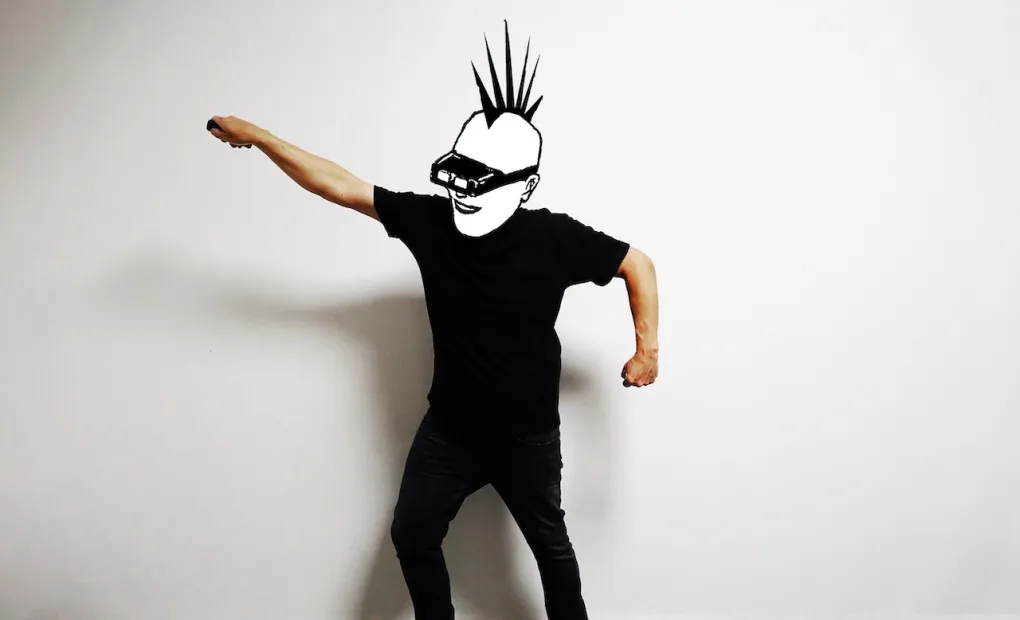
With DATAPUNK, Anthony Rother created a sound in the early 2000s that had a lasting impact on the European electro scene. Tracks like “Father,” “Back Home,” “Punks,” and “Big Boys” blended futuristic soundscapes, synth-pop influences, and emotional depth into a musical style that continues to resonate today. When Rother deliberately brought the project to a close in 2015 after a final DATAPUNK performance in Amsterdam, he wanted to break free from the expectations associated with his own success, and create space for new creative developments. “Anthony Rother presents DATAPUNK 20+ YRS” is a comprehensive retrospective that includes not only the best-known DATAPUNK releases but also hybrid versions, live recordings, and previously unreleased productions from 2005 to 2010. In this interview, Rother discusses the process of cataloging his musical archive and the significance of DATAPUNK for his artistic work and his perspective on this defining chapter of his career. A radical break DATAPUNK was one of your most influential projects for many years. After more than a decade, what motivated you to revive DATAPUNK, and how do you look back on that decision now? In 2015, I decided to leave DATAPUNK behind because I didn’t want to spend the rest of my life playing “Father.” Musically, I was stuck in a rut at the time. I simply wanted to continue developing as an artist. In fact, it was a radical break. Just distancing myself wouldn’t have been enough. From a business and financial standpoint, there was no reasonable reason to end DATAPUNK, but from a creative perspective, it was necessary. I now know that the decision I made back then was the right one. The compilation is now the conciliatory and logical conclusion to this phase. To what extent has the ten-year gap changed your perspective on DATAPUNK’s music and ideas? The point I’ve reached as a musician today allows me to emotionally reintegrate the DATAPUNK tracks into my body of work. I love what I’m doing musically today; people accept my sound and me just as I am – even without DATAPUNK. It took me years to get to this point. The compilation had been in the works for a long time, but only now did I feel that it was the right fit for me. Apparently, that was the key to getting me back on the same page with DATAPUNK. Gut feeling The new album brings together classics, hybrid versions, live recordings, and previously unreleased tracks. What criteria did you use to decide which songs would be included on “DATAPUNK 20+ YRS”? Last year, I started putting the tracks together. I went through my entire archive, listened to everything, and then began making my selections. I edited and reworked many of the unreleased tracks – it was a wonderful journey. I chose what’s on the compilation now purely based on gut feeling. I have deliberately omitted my collaborations with DJ Hell and Sven Väth, as well as the remixes by Underground Resistance. However, they would certainly be interesting for a future compilation. Many fans consider “Father” to be one of your most iconic tracks. What makes this song so special to you personally, and why is it the perfect first sign of DATAPUNK’s return? To be honest, the track has taken on such a life of its own by now that I’m not really sure anymore what makes it so special. But I still remember driving over to my record distributor, Intergroove, back then to play them a demo version of “Father,” how special I thought the song was, and how the distribution folks couldn’t quite grasp that at such an early stage. I’d describe how I felt back then as “synchronicity.” Musical diary You also describe the compilation as a form of self-reflection. What insights did you gain about yourself as an artist while sifting through your archive? By 2015, I’d already been in the music business for 20 years. The DATAPUNK tracks are like a diary – they tell the story of my observations and my life. Looking back, it was a very beautiful and emotional time, but also one filled with many problems. During those 20 years of techno-life, I had also failed to grow up; it was time to address that, too. Looking back now at this musical diary has been – and continues to be – an intense experience. At one point, I had become far too much of a pure music producer – I lacked artistic depth. It was a kind of pursuit of perfection in musical execution. I’ve changed that again over the past 10 years. Today, for me, feeling comes first, and craftsmanship follows. Many artists eventually face a conflict between artistic growth and audience expectations. How difficult was it for you to break away from such a successful musical identity? It was a difficult process. I had refined the DATAPUNK sound several times, but at some point it became clear: I couldn’t go any further. I had to step away and find something new. And searching is a journey without a destination. At first, the audience reacted very negatively to my musical shift. But I was searching for myself, not for something that would work for the audience. The work on the sound basically took place on the fly. It was always clear to me that meeting expectations would kill my creativity. Some of the unreleased tracks on the album date back to the years 2005 through 2010. Why were they left on the shelf back then, and how does it feel to release them for the first time today? There were various reasons for that. Sometimes it was a matter of timing, or a project hadn’t worked out. Later on, indecision came into play, or the idea had already changed again. I’m glad that all these tracks are out in the world now. It’s a great feeling to be at peace with them after having lost touch with them for a decade. Hybrid set What role do you see DATAPUNK playing in your future – and are there any other visions or ideas you’d like to bring to life with it? “DATAPUNK (Hybrid Set) presented by Anthony Rother” is a new standalone project where I play only DATAPUNK tracks to celebrate this sound with the crowd. The project is a special one. It kicks off this summer with the Paradise City Festival in Brussels and the MIRA Festival in Barcelona – more events to follow. My regular “Anthony Rother (Hybrid Set)” will continue to be free of DATAPUNK; I’m fully focused on the here and now, as well as my musical evolution from Technobeat-Electro . I have collaborations planned with Mell G and Marcel Dettmann. :::embed Spotify Embed: Anthony Rother Presents DATAPUNK 20YRS
::: From the FAZEmag 173/07.2026 Text: Triple P Translation: Anil Mustafa www.instagram.com/anthony_rother Dieser Artikel erschien ursprünglich auf: FAZEmag
Stimmen zum Beitrag
Noch nicht bewertet
Login zum Kommentieren.
Noch keine Kommentare